How to Get Rid of PMI: The 80% and 78% Rules Explained
You can ask your loan servicer to cancel private mortgage insurance (PMI) once your loan balance is scheduled to reach 80% of your home's original value, or sooner if extra payments get you there. PMI must end on its own at 78%, or at the halfway point of your loan, if you are current on payments. These rules cover conventional loans. FHA and VA loans work differently.
What is PMI, and why do you pay it?
PMI is insurance that protects the lender, not you, if you stop paying your loan. Lenders usually require it on a conventional loan when you make a smaller down payment. It is added to your monthly payment or paid another way your lender offers.
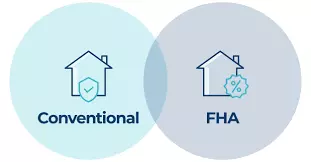
It is not forever. Federal rules say when it has to stop. The CFPB lays them out for most single-family loans on a home you live in that closed on or after July 29, 1999. Learn how loan types differ in FHA vs. conventional loans.
When can you ask to cancel PMI?
When your principal balance is scheduled to reach 80% of your home's original value. You don't have to wait for the date if you pay extra and get there sooner. The CFPB says your servicer is legally required to grant the request if you meet the conditions:
- Ask in writing.
- Have a good payment history and be current on your payments.
- Certify there are no other loans on the home, like a second mortgage or home equity line.
- Show the value hasn't dropped. Your servicer may ask for proof, like an appraisal.
Your loan's PMI disclosure, from closing, shows the date you are scheduled to reach 80%. Your servicer can also tell you.
When does PMI end on its own?
Two ways, even if you never ask:
- At 78%. Your servicer must end PMI on the date your balance is scheduled to reach 78% of the original value, if you are current. If you are behind, it ends soon after you catch up. This date follows your original payment schedule, so extra payments don't move it. That is why asking at 80% is often faster.
- At the midpoint. PMI must end the month after you reach the middle of your loan's payment schedule, even if you haven't hit 78%. On a 30-year loan, that is after 15 years. You still need to be current.
What does that look like in dollars?
Here is simple math, as an example. Say your home's original value was $300,000.
- 80% of $300,000 is $240,000. When your balance is scheduled to hit that, you can ask to cancel.
- 78% of $300,000 is $234,000. When your balance is scheduled to hit that, PMI should drop off on its own.
"Original value" means the lower of what you paid or what the home appraised for when you bought, not what it is worth today. The federal law behind these rules is the Homeowners Protection Act, 12 U.S.C. 4902.
Can you get rid of PMI faster?
- Pay extra on principal. Even small extra payments move your 80% date sooner. Tell your servicer the extra goes to principal.
- Ask about a new value. If your home is worth much more now, some lenders have their own rules that allow removal based on a new appraisal. The CFPB notes some lenders allow removal under their own standards. Ask yours what it requires.
- Refinance. A new loan at 80% or less of today's value may not need PMI. Refinancing has its own costs, so compare them with a licensed loan officer. See refinancing your home.
Loans owned by Fannie Mae or Freddie Mac can have their own cancellation rules. The CFPB says those rules can't be less favorable to you than the federal ones.
What about FHA and VA loans?
They are different. An FHA loan has its own mortgage insurance, called MIP, with its own rules for when it ends. On many FHA loans it lasts much longer than PMI. A VA loan has no private mortgage insurance. The CFPB says to contact your servicer for the rules on these loans. Ask a licensed loan officer before you choose a loan type.
What are the steps to cancel PMI?
- Find your 80% date on your PMI disclosure or ask your servicer.
- Check that you are current and have no second loan on the home.
- Send a written request to your servicer.
- Order an appraisal if the servicer asks for one, and ask who pays for it first.
- Check your next statement to make sure PMI is gone.
If your servicer won't follow the rules, you can send a complaint to the CFPB.
Buying soon and want to plan around PMI?
Run your numbers in the affordability calculator and the mortgage calculator, look at down payment help, and get pre-approved with a licensed loan officer. Ask them to show you a loan with and without PMI so you can compare.
Quick answers
When does PMI come off automatically?
When your balance is scheduled to reach 78% of the home's original value, or the month after the midpoint of your loan term, as long as you are current on payments.
Can I ask to remove PMI early?
Yes. You can ask in writing once your balance reaches 80% of the original value, including through extra payments. You need a good payment history and no second loan on the home.
Does a higher home value remove PMI?
Not automatically. Some lenders let you remove PMI based on a new appraisal under their own rules. Ask your servicer what it requires.
Does FHA mortgage insurance come off at 78%?
No. FHA loans have their own mortgage insurance rules, and on many FHA loans it lasts much longer. Ask your servicer or a licensed loan officer.
Is PMI the same as homeowners insurance?
No. PMI protects the lender if you stop paying. Homeowners insurance protects your home and belongings from damage.
Get pre-approved · Affordability calculator · FHA vs. conventional
Sources and further reading
Updated November 14, 2026. We check these sources each time we update this guide. See our editorial policy.
Categories
Recent Posts